
- From
- £1,800 fitted, typical £1,800 to £4,200
- Included
- Motor, remotes, safety edge, fitting
- Lead time
- 2 to 4 weeks, fitted in a day
The essentials
An electric garage door is an insulated roller or sectional door driven by a motor, opened from a remote or a phone, with a safety edge that stops and reverses it on contact. Both types we fit come motorised as standard with remotes and the safety edge included. Fitted prices start from £1,800 and typical jobs land between £1,800 and £4,200 depending on size, insulation and finish. Lead time is two to four weeks and fitting usually takes a day.
Roller or sectional
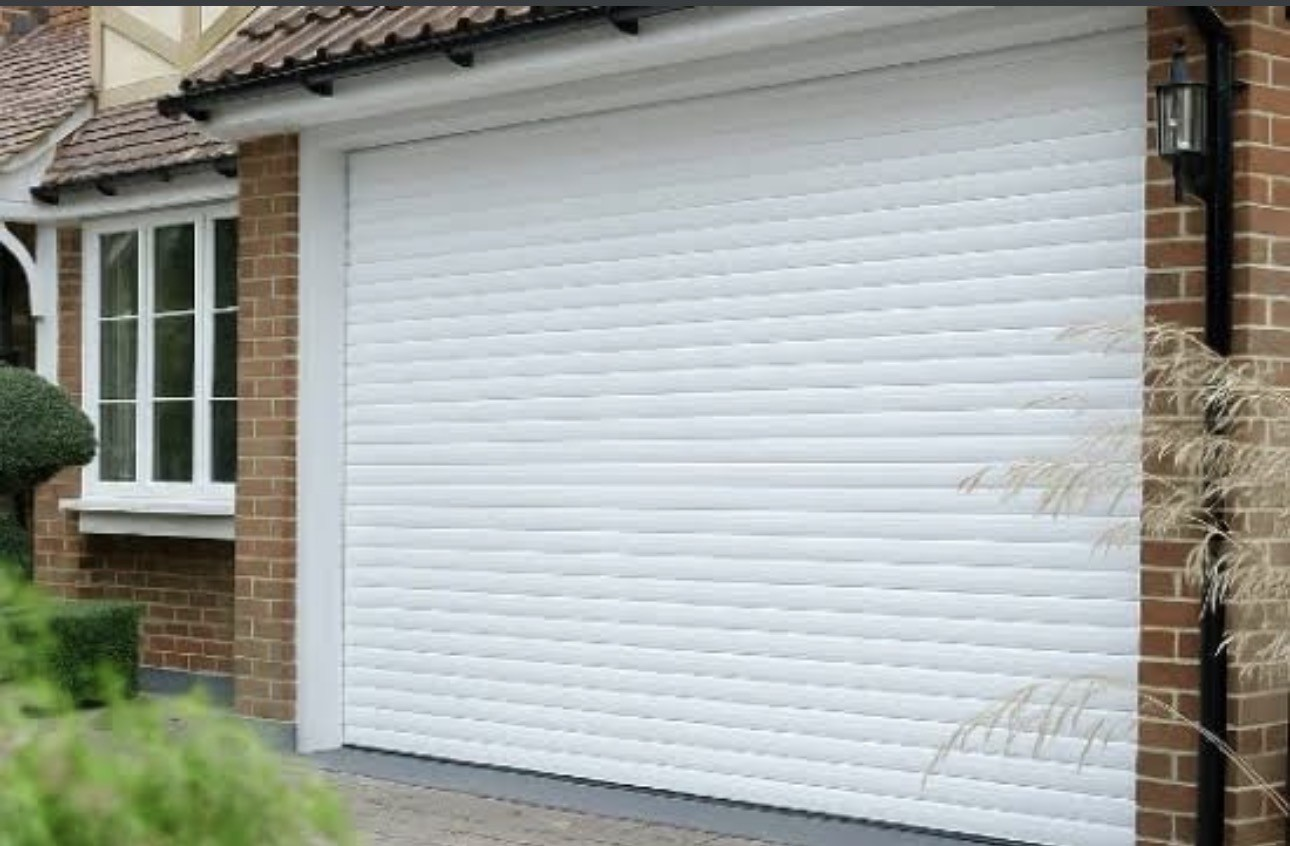
An insulated roller door is a curtain of foam-filled aluminium slats that rolls into a compact box above the opening. It needs almost no headroom, leaves the ceiling clear and suits garages used for storage or as a workshop. A sectional door is made of a few horizontal insulated panels that lift up and slide back along the ceiling on tracks. It seals more tightly, offers more finishes including timber-look and glazed panels, and suits garages where kerb appeal and thermal performance both matter. Our roller versus sectional guide goes deeper; both are fitted electric as standard.
How the motor and controls work
Roller doors are driven by a tubular motor inside the roll; sectional doors by a ceiling-mounted operator on a rail or a side motor. Either way the door is opened by a small handheld remote, with two supplied as standard, and can be added to a wall switch inside the garage or a keypad outside. Smart control adds a hub or Wi-Fi module so the door can be opened, closed and checked from a phone, useful for deliveries and for the moment on the motorway when you cannot remember whether you shut it.
Safety features
Electric doors carry real weight and move under power, so the safety systems are not optional extras.
- Safety edge: a pressure-sensitive strip along the bottom of the door that stops and reverses it if it meets an obstruction.
- Photocell beams: an optional pair of sensors across the opening that stop the door if anything breaks the beam.
- Manual release: a way to open the door by hand in a power cut, from inside on most doors and via an external lock on garages with no other entrance.
- Anti-drop and hold-down: brakes and locking that stop the curtain falling if a component fails and resist being forced up from outside.
Power and installation
The motor needs a fused mains supply near the door head, usually a standard socket or a fused spur. If the garage already has power, that is often all it takes; if not, an electrician runs a supply before we fit. Installation itself is normally a single day: remove the old door, fit the guides or tracks, hang the door, fit and set the motor, programme the remotes and test the safety edge. We take the old door away.
Insulation and everyday comfort
Both roller and sectional doors we fit are insulated, which matters more than people expect. An integral garage shares walls with the house, and an uninsulated up-and-over door is often the coldest surface in the building. Insulated doors also close quietly and seal against draughts and dust, which is why so many enquiries come from people who have just started using the garage as a gym or an office.
What to tell us for a price
Width and height of the opening, whether it is a single or double, whether there is headroom above the opening and side room either side, whether there is power, and what colour or finish you have in mind. From that we can give a realistic range on the phone and confirm it after a free survey.
Electric garage door questions
Can I get in during a power cut?
Yes. Every door has a manual release. On garages with a back door you release from inside; on garages with no other entrance we fit an external release lock.
How much does an electric garage door cost fitted?
From £1,800, with most jobs between £1,800 and £4,200. Size, insulation and finish set the price; the motor, remotes and safety edge are included.
Can you motorise my existing garage door?
Retrofit motors exist for some doors, but old up-and-over and side-hinged doors are rarely worth automating. A new insulated electric door is usually the better long-term spend, and it is what we supply.
How noisy are they?
Quiet enough not to disturb a bedroom above. Roller doors are a soft whir; sectional operators run on belt or chain drives, with belt the quieter of the two.
Do they work with Alexa or Google?
With a compatible smart module or hub, yes. It is an optional extra and can be added later on most systems.