
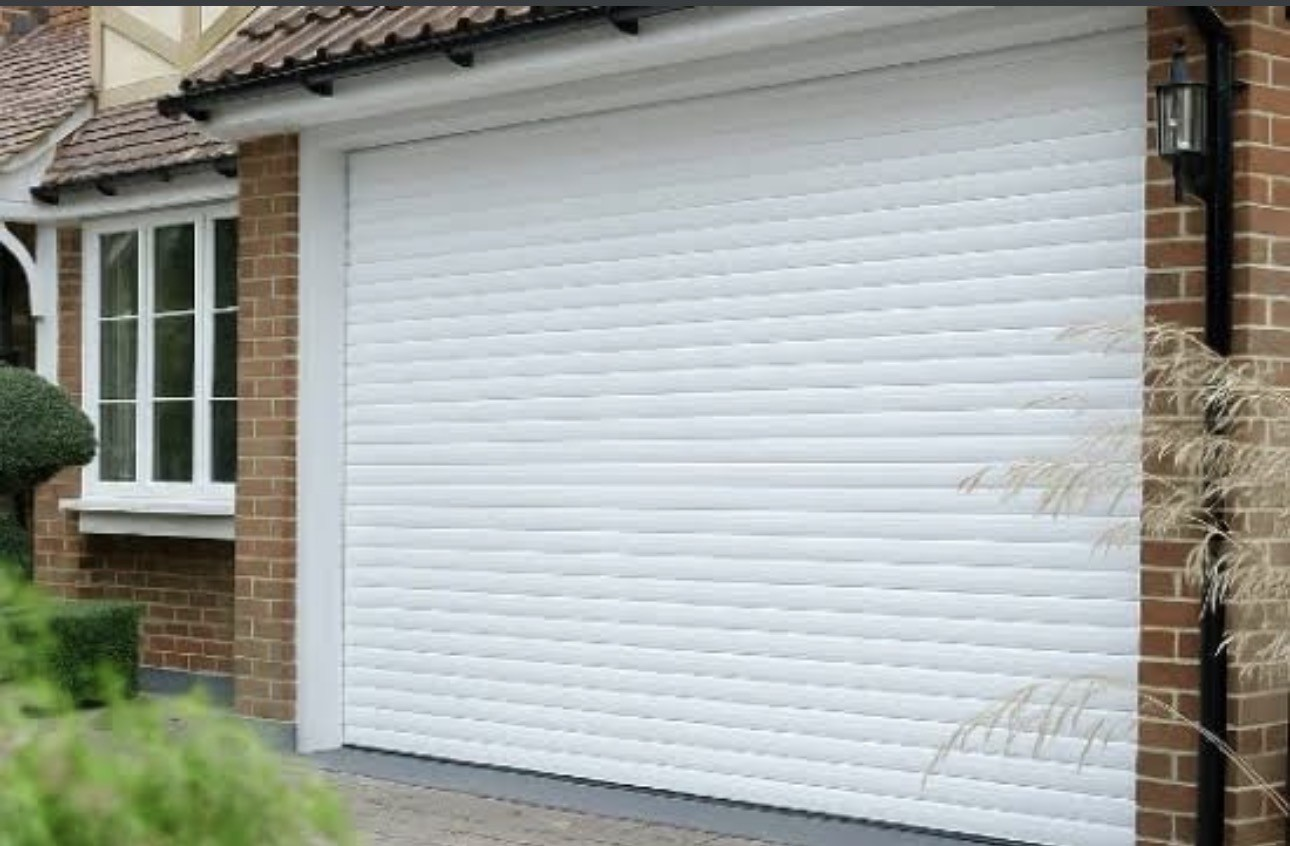
What the motor package includes
Every electric garage door we fit includes the motor, two remotes and a safety edge; the choice is what you add on top. Roller doors use a tubular motor hidden inside the roll; sectional doors use a rail operator on the ceiling. Useful extras are a wall switch inside, a keypad outside, a smart module for phone control, and on garages with no other door, a battery backup or external release so a power cut never locks you out.
- Standard
- Motor, 2 remotes, safety edge, manual release
- Popular extras
- Wall switch, keypad, smart module
- For no-other-entrance garages
- External release or battery backup
Two kinds of motor
A roller door's motor is a tubular unit inside the barrel the curtain wraps around, so nothing is visible; it is sized to the door's weight and comes with its own control box. A sectional door is pulled by an operator mounted on the garage ceiling, running a trolley along a rail on a belt or chain. Belt drives are quieter and suit garages under bedrooms; chain drives are robust and marginally cheaper. Both are set with electronic limits so the door stops exactly at open and closed every time.
Remotes, switches and keypads
Ways to tell the door to move, from the simplest to the most flexible.
- Handheld remotes: two supplied as standard, rolling-code for security, with spares available for extra drivers.
- Wall switch: a push button inside the garage so you can close the door behind you without hunting for a remote.
- External keypad: a PIN pad by the door for children, dog walkers and deliveries, with codes you can change.
- Car integration: some vehicles' built-in garage buttons can be paired to the motor.
Smart control from a phone
A smart module or hub connects the motor to your Wi-Fi, so the door can be opened, closed and checked from an app anywhere. The everyday uses are mundane and valuable: confirming the door is shut from the office, letting a courier put a parcel inside and closing up behind them, and a notification if it has been left open after dark. Voice control through a home assistant follows from the same module. It can be fitted at installation or added later.
Power cuts and manual release
All motors have a manual release. On a garage with a side or back door you go in and pull a cord or turn a lever to free the door. On a garage with no other entrance, that is not enough, so we fit either an external release lock, which lets you disengage the motor from outside with a key, or a battery backup that gives a number of cycles without mains power. Tell us at survey if the garage door is the only way in.
Safety systems around the motor
The safety edge along the bottom of the door stops and reverses it if it meets anything. Photocell beams across the opening add a second layer that triggers before contact. Motors also have force limiting, so they stop if the door meets more resistance than expected. Anti-lift devices prevent the door being forced up from outside while the motor is holding it closed. These are set and tested on the day of fitting.
Looking after the motor
Motors are low maintenance. Change the remote batteries when the range drops, keep the safety edge clean so it triggers properly, and have the door's balance and limits checked if it ever starts to stop short or reverse for no reason. Our guide to a garage door that will not open covers the common faults and which you can safely check yourself.
Motor and control questions
How many remotes come with the door?
Two as standard. Extra remotes can be supplied and programmed at installation or later.
Can the code be copied by a thief?
Remotes use rolling codes that change with every press, so a captured signal does not work a second time. Keypads let you change the PIN whenever you like.
What if I lose a remote?
The motor can be reset so lost remotes no longer work, and the remaining ones re-paired. It takes a few minutes.
Is smart control secure?
Reputable modules use encrypted connections and your own account. As with any smart device, use a strong password and keep the app updated.
Can I add a keypad or app later?
Yes, on almost all systems. Many customers start with remotes and add a keypad once the children are old enough to let themselves in.