
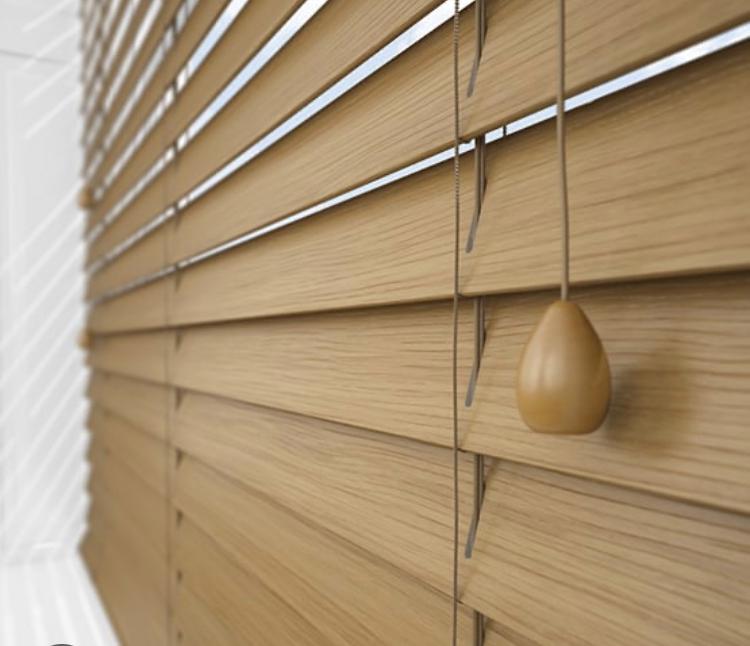
Three products hiding behind one search
When a customer rings and says they are after shutter blinds, the first two minutes of the call are spent finding out which of these three they have in mind.
- An interior plantation shutter: a made-to-measure frame with hinged louvred panels, fitted permanently to the window.
- A shutter-style blind: usually a 50mm wooden or faux-wood venetian blind, hung from a headrail, that gives a similar horizontal-slat look at a fraction of the price.
- An external roller shutter: an aluminium security curtain that rolls down over the outside of a window or shopfront. That is a security product rather than a window dressing, and it is not something we fit.
How a real shutter differs from a shutter-look blind
Both give you horizontal slats you can tilt. The differences are in how they are held, how they age and what they cost. A shutter's louvres sit inside a rigid panel, so they never sway, tangle or hang crooked, and the whole panel swings clear when you want to clean the glass. A wooden venetian hangs on cords or tapes, so it moves in a draught, needs the cords managing for child safety, and can only be raised or lowered rather than opened like a door.
On price, a 50mm wooden venetian typically sits between £140 and £220 per window fitted, while a plantation shutter on the same window starts from £450. The blind can be ordered and fitted in two to three weeks; the shutter takes six to eight, or two to three on the UK fast-track range.
When the blind is the better buy
There are honest cases for choosing the wooden venetian. If you rent, the blind's small headrail brackets are easier to make good than a shutter frame. If you plan to move within a year or two and want to take your window dressings with you, blinds come down in minutes. If the window is a temporary space, a box room being used as an office for now, the blind gives you the look for a third of the outlay.
It is also the right choice on windows you open inwards regularly, where a shutter panel would need to be swung out of the way each time.
When the shutter earns its price
Choose the shutter when the window is permanent and visible. Front bays, living rooms and main bedrooms are where the difference between a slat that hangs and a louvre that is held shows every day. Bathrooms and kitchens are another case, because a waterproof ABS shutter shrugs off steam that would warp a real-wood blind. And any household with small children benefits from a product with no cords at all.
The final reason is longevity. A shutter is fitted once and stays put; wooden venetians tend to get replaced when a cord frays or a slat cracks. Over a decade the price gap narrows.
Getting a like-for-like comparison
Because we supply both, a free home survey can price the same window both ways and let you feel the difference in the showroom before you decide. Bring the room's purpose to the conversation, not just the window size, because that is what tips it one way or the other.
Key points
- Plantation shutter
- Hinged panels, fixed frame, from £450 fitted
- Shutter-look blind
- 50mm wooden venetian, £140 to £220 fitted
- Security shutter
- Exterior product, not something we supply
Straight answers
Are shutter blinds and plantation shutters the same thing?
Often, yes. Most people typing shutter blinds are picturing a plantation shutter. If you want hinged panels with wide louvres in a fixed frame, that is a plantation shutter.
Can a wooden venetian blind look like a shutter?
From across the room, a 50mm slat with cloth tapes gets close. Up close the cords, the headrail and the way the slats sway give it away. Neither is wrong; they are simply different products at different prices.
Do you fit external security roller shutters?
No. We fit interior plantation shutters, made-to-measure blinds, motorised garage doors and awnings. For a security shutter on a shopfront or window you would need a specialist security shutter installer.
Which is warmer in winter?
A closed plantation shutter, because the panel sits tight inside a frame and traps a layer of still air. A venetian blind has gaps around the edges and between slats that let warm air reach the glass.