
The short answer
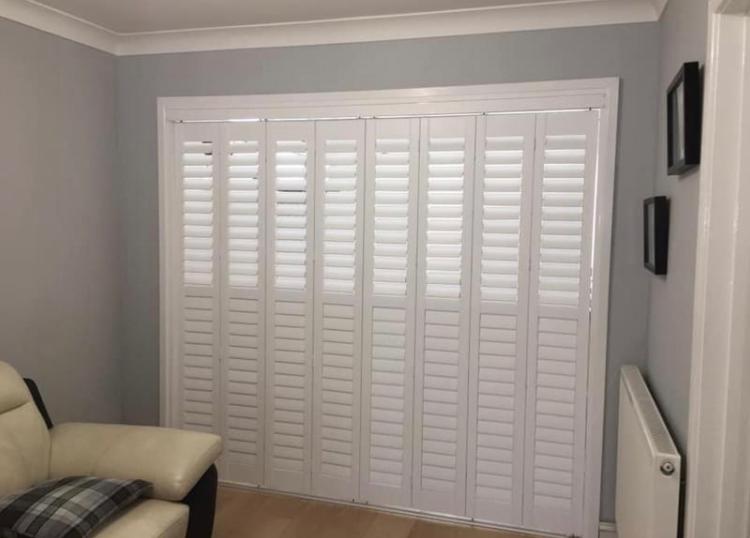
Short answer: an L-frame laps slightly onto the wall face, hiding an untidy plaster edge and closing gaps in an out-of-square opening, while a Z-frame projects further and suits shallow reveals where panels must sit proud of the glass. A bead-fit frame is the most discreet but needs a deep, true reveal. Two identical panels can look completely different depending on the frame they sit in and how the tilt is operated.
- L-frame
- Covers the reveal edge, hides imperfections
- Z-frame
- Face-fitted lip, good for shallow reveals
- Bead fit
- Minimal, sits inside the reveal
Choosing the frame
A bead-fit frame is the most discreet and needs a reasonably true, deep reveal. An L-frame laps onto the wall face slightly, which hides an untidy plaster edge and closes gaps in an out-of-square opening. A Z-frame projects further and suits shallow reveals where the panel has to sit proud of the glass.
In period property the L-frame does a lot of quiet work, because very few original openings are square enough for a bead fit to close cleanly all round.
Hinges and how panels swing
Hinge choice sets which way panels open and how far they fold back. On wide openings we use more, narrower panels so they stack tight against the reveal rather than swinging out into the room.
Hinge finish is usually matched to the panel colour so it disappears, but a contrasting finish is an option where you want the hardware to be part of the look.
Tilt rods: centre, offset or hidden
A traditional centre rod is the classic look and is easy to operate. An offset rod moves it to the side stile for a cleaner face. A hidden tilt mechanism removes the rod entirely, giving an uninterrupted louvre run, the most contemporary option and the one that suits wide blades best.
Hidden tilts move a bank of louvres by pushing any blade, so they are intuitive, but they need a slightly firmer touch than a centre rod.
- Period sash, traditional scheme, centre rod
- Modern bay, wide blades, hidden tilt
- Narrow panel beside a wall, offset rod
- Rental or high-traffic room, centre rod, simplest to use
Magnets, catches and stops
Panels are held closed by magnets or catches, and the positioning of the keeper plate is what stops a panel drifting open. On tall panels we fit more than one. It is a small detail that makes the difference between a shutter that sits crisply shut and one that always looks slightly ajar.
Common questions
What is the difference between an L frame and a Z frame?
An L-frame laps a little onto the wall face and hides imperfect plaster; a Z-frame has a deeper face-fitted lip so panels clear the glass in a shallow reveal.
Which frame type is best?
It depends on the reveal. Deep and true reveals take a discreet bead fit; shallow or irregular reveals are better with an L-frame or Z-frame, which also hide edge imperfections.
Is a hidden tilt worth it?
It gives the cleanest look, particularly with wide louvres, and most people who see both choose it. A centre rod is more traditional and slightly lighter to operate.
Will fitting damage my window frame?
Frames fix into the reveal, and where drilling into the window profile is not appropriate we use an alternative fixing. We discuss this on survey, especially with new uPVC units.
Can panels fold fully back?
With the right panel widths and hinge arrangement, yes. On very wide openings we split into more panels precisely so they stack clear of the glass.