
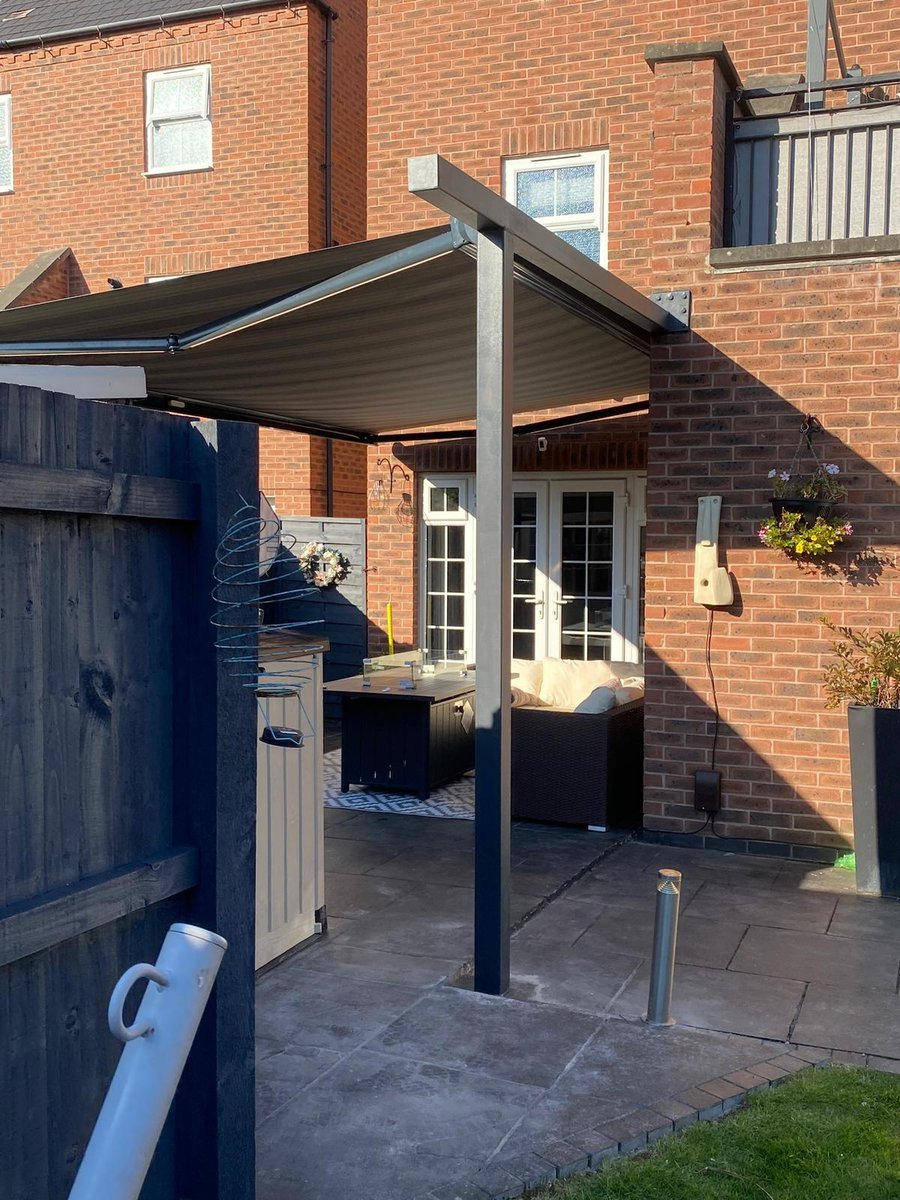
The short answer
Awnings fail in wind, not in sun. Almost every damaged awning we are called about was left out during a gust, or was specified too wide for an exposed elevation. Both are avoidable at the quoting stage.
- Main risk
- Gusts on an extended awning
- Protection
- Full cassette housing when retracted
- Useful add-on
- Wind sensor with automatic retraction
Wind rating is a specification, not a marketing word
Awnings carry a wind class that describes the conditions they can stay extended in. A sheltered courtyard behind a house can take a wider projection than an exposed corner plot catching wind off open fields, and the same awning behaves very differently in those two places.
We look at the elevation, the surrounding shelter and the projection you actually need before recommending a width, a slightly smaller awning that stays out is more use than a large one you daren't deploy.
Cassette housings earn their cost
A full cassette closes around the fabric and arms when retracted, keeping rain, leaf debris and UV off the whole assembly. Open awnings are cheaper but the fabric sits exposed year round, and it shows within a few seasons.
For anything left up over winter, the cassette is the difference between a fabric that still looks right in five years and one that is streaked and stiff.
Rain, pitch and pooling
Light rain is fine at a decent pitch, the water runs off the front bar. The problem is standing water pooling in a slack fabric, which loads the arms far beyond their design and can bend them in one night. Retract in sustained or heavy rain rather than trusting the pitch.
Setting a slightly steeper pitch at installation helps shed water and reduces low-sun glare under the awning at the same time.
Sensible habits
Retract before leaving the house for the day, retract overnight, and let the fabric dry before closing it away where you can, closing damp fabric repeatedly is what causes mildew spotting along the fold lines. A wind sensor covers the times you are not there to make that call.
Common questions
Can I leave my awning out in the rain?
Light rain at a good pitch is fine. Heavy or prolonged rain risks pooling, which is the main cause of bent arms, retract it instead.
Do I need a wind sensor?
If the awning is on an exposed elevation, or you are out during the day, it is worthwhile. It retracts automatically when gusts exceed the set threshold, which is exactly when nobody is there to do it manually.
Is a cassette awning worth the extra?
For year-round installations, yes. Protecting the fabric and arms when retracted extends the life of the whole unit and keeps it looking clean.
What if my wall is rendered or has cavity issues?
Fixing is the critical part of an awning installation. We check the substrate on survey and specify the bracket and fixing to suit, including alternatives where a direct wall fix is not appropriate.