
Two kinds of dining room
Most homes have one of two dining rooms. The first is the separate, often front-facing room in a Victorian, Edwardian or 1930s house, used for family meals and occasions. The second is the dining end of an open-plan kitchen, often in a rear extension with large glazed doors. The right window covering is different for each, and trying to use one answer for both is where people go wrong.
The formal dining room: why shutters fit
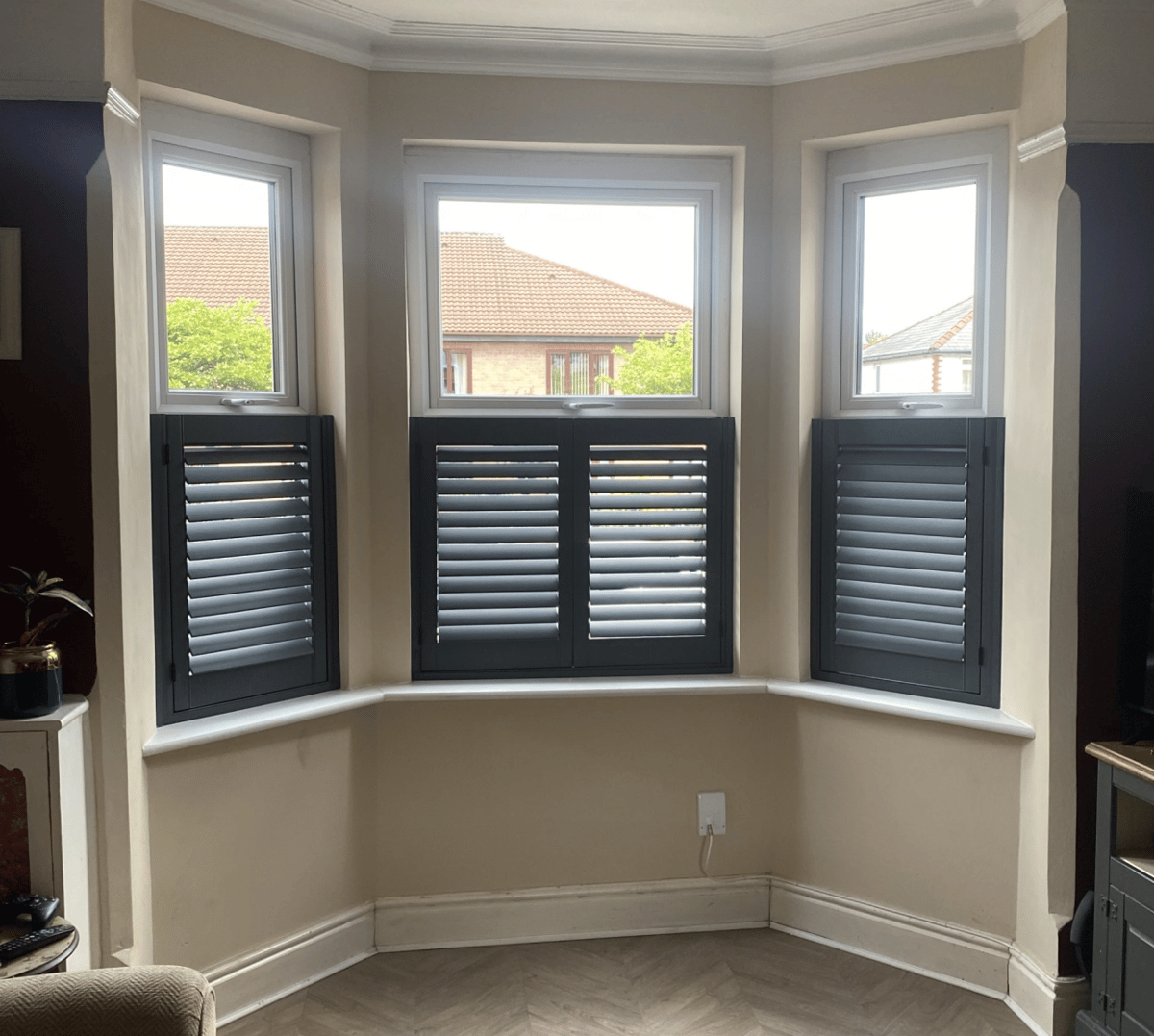
In a separate dining room the window is a feature. Shutters painted to match the woodwork look like joinery, frame the window at night and give privacy from the street without curtains. Because the surface is painted and hard, it wipes clean and does not absorb the smell of a Sunday roast the way fabric can.
Tier-on-tier is useful here: close the lower panels during a meal so passers-by cannot see in, and leave the top open for daylight. On a large bay, the same bay rules apply as anywhere else, with frames made to the angles of the bay.
The kitchen-diner: why blinds often win
Open-plan diners usually have wide sliding or bifold doors. Shutters can be made for doors, but on a very wide span they get heavy and expensive. Vertical blinds draw to one side and let you walk through; roller blinds fitted to each door leaf keep the frames clear. Both cost far less than shutters on the same glazing.
- Sliding patio doors: vertical blinds, drawn aside to walk through.
- Bifolds: a blind per leaf so the doors still fold.
- Windows near the cooker: wipe-clean roller or faux-wood rather than soft fabric.
Softening a hard room
Dining rooms often have wooden floors, a big table and little upholstery, so voices bounce. A Roman blind in a heavier fabric adds softness that a shutter will not. Some owners layer: shutters for privacy and daylight, and curtains or a Roman blind for evening warmth and colour.
Evening light
Dinners happen after dark for much of the year. Shutters tilt closed so lamps and candles are not reflected back off black glass, and they stop the room being a lit stage for the street. Blinds do the same job when lowered; the difference is mainly how the window looks when you are not using it.
Budget and next steps
If the budget covers only one room of shutters, the front dining room or living room is usually the best place for them, with blinds in the kitchen-diner. We can price both on one free survey within 20 miles of Warrington, so you can compare them for the same windows.
Key points
- Blinds
- Quoted after survey
- Shutters
- Quoted after survey
- Blind lead time
- Confirmed when you order
Dining room questions
Should I have shutters or blinds in a dining room?
Shutters suit a separate, formal or street-facing dining room; blinds usually suit an open-plan diner with wide doors, at a lower cost.
Do shutters absorb food smells?
No. The painted surface is hard and wipes clean, unlike fabric that can hold cooking smells.
What blinds work on dining room patio doors?
Vertical blinds on sliding doors, and a blind on each leaf of bifolds so they still fold back.
Can you quote shutters and blinds on the same visit?
Yes. One free survey can price both, so you can compare them on the same windows.