
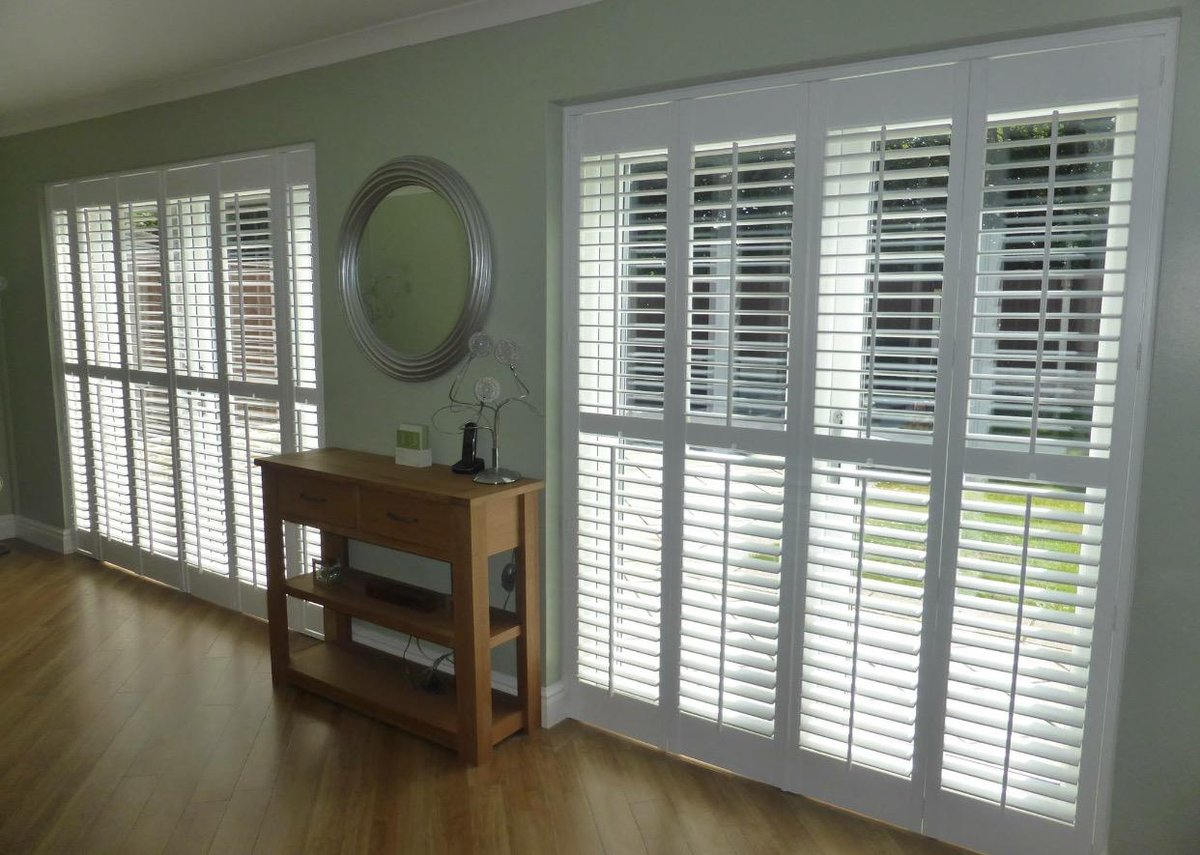
- Vertical glazing
- Shutters work, usually face-fixed
- Roof glazing
- Pleated or roller blinds only
- Material
- Waterproof ABS recommended for temperature swings
Yes, with conditions
Plantation shutters work well on the vertical glazing of a conservatory or orangery, and they transform how usable the room is by cutting glare and screening the garden at night. They do not work on the roof, which needs pleated or roller blinds instead. The other watch-points are shallow uPVC frames, which need a face-fixed frame rather than a recess fit, and doors, which need tracked panels. Priced per window from £450 fitted.
What makes a conservatory different
A conservatory is mostly glass, mostly uPVC, and swings between very hot and very cold within a single day. All three affect the shutter specification. The frames are shallow, so there is rarely a deep reveal to fit into. The temperature swings mean timber would move more than it should. And the sheer quantity of glazing means the shutters are a bigger proportion of what you see than in any other room.
Fitting to uPVC frames
Most conservatory glazing has a frame depth of only a few centimetres, nowhere near the 65mm or so a recess-fitted shutter needs for louvre clearance. The answer is a face-fixed frame, usually an L or Z profile, that sits proud of the glazing bar and gives the louvres room to tilt. It fixes into the uPVC mullions rather than the glass, and the survey checks there is enough solid frame to take a screw at each fixing point.
Where the conservatory sits on a dwarf wall, full height shutters run from the top of that wall to the eaves. Where it is glazed floor to ceiling, panels get tall and either a mid-rail or a tier on tier split keeps them manageable.
Why we suggest ABS in conservatories
Waterproof ABS shutters are usually recommended for bathrooms, but they are just as well suited to conservatories. The material is a solid polymer that does not absorb moisture, so condensation on a January morning and 35 degree heat in July make no difference to it. Hardwood would be the wrong choice here; MDF-cored composite copes reasonably but ABS is the safer long-term option in a room that behaves like a greenhouse.
The roof, and why it stays as blinds
Shutters are rigid rectangular panels; conservatory roofs are sloped, often triangular at the ends and supported by bars that run in the wrong direction. There is no sensible way to shutter them. Pleated roof blinds, made to each roof panel and tensioned on side wires, are the standard answer, and the two products sit together comfortably: shutters on the walls, pleated blinds above. We supply both, and specialist roof blinds are typically priced from £300 upwards per section.
Doors within the conservatory
French doors to the garden take hinged panels on each leaf, with clearance for the handles. Bifolds and sliding doors take tracked shutters that stack to one side. If the conservatory is the main route to the garden and the doors are open all summer, consider leaving the doors in a vertical blind and shuttering only the fixed glazing; it saves money and avoids stacking panels where people walk.
Conservatory shutter questions
Will shutters make my conservatory cooler in summer?
They reduce glare and direct sun on furniture noticeably, and closed louvres on the sunny side help. Roof blinds do more for temperature because most of the heat comes from above.
Can shutters be fitted to a lean-to conservatory?
Yes on the vertical glazing. The sloped roof of a lean-to still needs pleated or roller blinds.
Do I need planning permission?
Interior shutters are not a planning matter. If your conservatory is on a listed building, internal alterations may need consent, and our guide to listed buildings covers that.
How are shutters fixed without damaging the uPVC?
Frames are screwed into the solid mullions and transoms of the conservatory frame using appropriate fixings, never into the glass or the thin external cladding. The fixings are hidden behind the frame's cover strip.
Would blinds be cheaper for the whole conservatory?
Yes. Pleated and perfect-fit blinds for every pane will cost less than shutters on the walls. Shutters are chosen for their look, their durability and the way they make the space feel like a room rather than a greenhouse.
Can shutters be added if I already have roof blinds?
Yes. Wall shutters and existing pleated roof blinds sit together comfortably, and the survey simply checks that the shutter frames clear the roof blind side wires and brackets.