
The short answer
No blind turns single glazing into a passive house. What good dressings do is add a still-air layer and stop your body radiating heat at a cold pane, which changes how a room feels far more than the numbers suggest.
- Biggest gain
- Rooms with large or older glazing
- Best performers
- Solid panels, honeycomb blinds, lined layers
- Free improvement
- Closing at dusk, opening in daylight
Where the heat goes
Glass is the weakest part of a wall. Heat leaves through it by conduction, and the cold surface then pulls radiant heat from everything in the room including you. A closed panel or a thick blind interrupts both by adding a barrier and a trapped air gap.
The tighter the dressing sits to the reveal, the better that air pocket works, a blind with big gaps at the sides simply lets convection carry the warm air down the glass.
Which products hold the most still air
Honeycomb and cellular blinds are built specifically for this, with sealed cells of trapped air. Solid shutter panels come next, then louvred shutters closed tight, then lined roman blinds and interlined curtains.
Layering beats any single product: a cellular blind inside a shutter, or a shutter with a curtain, gives two air gaps and a much better result at the seating position.
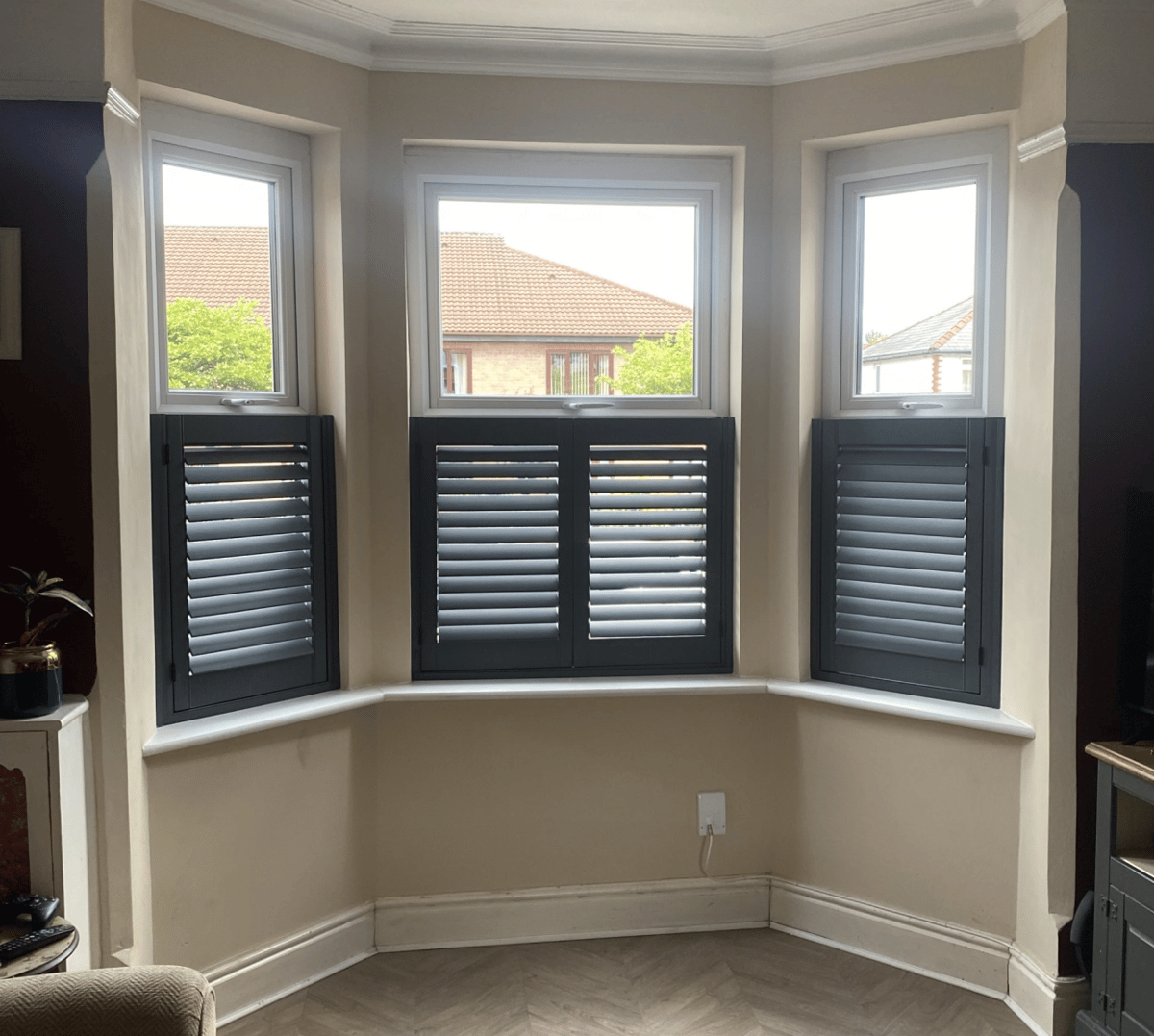
- Large bay with old glazing, shutters plus a lined layer
- North-facing bedroom, cellular blind in the recess
- Conservatory, dressings on roof and sides, or the room stays cold
- Front door glazing, a fitted panel rather than a loose curtain
Use it as a daily routine
Open everything during daylight so free solar gain reaches the room, then close everything at dusk before the room starts to cool. Doing that consistently produces a bigger difference than upgrading from a good dressing to a slightly better one.
Being straight about expectations
If a room is cold because of an uninsulated floor, a failed radiator or an unheated space next door, a window dressing will not fix it. We will say so on survey rather than sell you panels that disappoint. Where the glazing genuinely is the weak point, the change is immediate and obvious.
Common questions
Do shutters keep heat in?
Closed panels add a still-air layer at the coldest surface in the room, which reduces heat loss through the window and stops radiant chill. It is a meaningful comfort improvement rather than a replacement for insulation or glazing upgrades.
Are cellular blinds better than shutters for warmth?
On the thermal measure alone, a good honeycomb blind performs strongly because of its sealed air cells. Shutters win on durability, privacy control and appearance, which is why many people fit both on the coldest windows.
Will they help in a conservatory?
Only if the roof is covered too. Most conservatory heat loss goes upwards, so side blinds alone make little difference in January.
Does closing shutters during the day help?
In deep cold with no sun, marginally. On a bright day it costs you free solar gain, so open them and close at dusk.