
The short answer
Fading is cumulative. A south-facing lounge gets a few hours of hard light a day, and after two summers the carpet by the window is a different colour from the carpet by the door. You cannot undo it, but you can slow it a long way with cover that is easy enough to use every day.
- Main culprits
- Direct UV plus visible light and heat
- Most effective
- Angled louvres or solar fabric during peak hours
- Rooms to prioritise
- South and west facing living space
Why modern glass is not enough
Most double glazing already blocks a large share of UVB, which is why people are surprised when fading still happens. The remaining UVA, plus plain visible light and heat, is enough to bleach dyes over time, particularly reds and blues in natural fibres, and unfinished or oiled timber.
So the question is not whether your glass blocks UV, it is how many hours a day that patch of floor is in direct sun.
Cover that people actually use
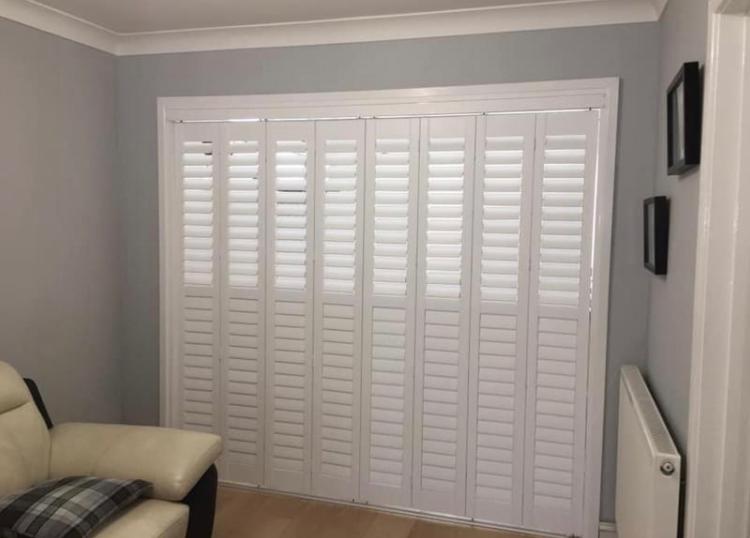
A dressing only protects if it gets deployed. Louvred shutters win here because tilting takes a second and does not darken the room, so it happens daily. Blinds that must be pulled fully down get left up, and the sofa keeps cooking.
For rooms with valuable prints or a specific piece to protect, a solar roller left down during peak hours is the more consistent option, since it needs no adjustment as the sun moves.
Plan by orientation
South-facing rooms get long, high-angle exposure through the middle of the day. West-facing rooms get intense low sun in the evening, which reaches deepest into the room and does the most damage to furniture positioned well back from the window.
North-facing rooms need almost nothing for fading, so spend the budget where the sun actually lands.
- South-facing lounge, louvres tilted up between 11am and 3pm
- West-facing dining room, solar roller down for the evening burn
- East-facing bedroom, light control matters more than fading
Small changes that add up
Rotate rugs and cushions seasonally so the fade is even rather than a hard line. Keep artwork off the wall that faces the window directly. If you are replacing a floor in a bright room, choose a finish and species known to be light-stable rather than one that ambers quickly.
Common questions
Do shutters stop UV completely?
Closed panels block direct sunlight on that area, so effectively yes while they are closed. Tilted louvres cut the direct beam and scatter the rest, which is a large reduction rather than elimination.
Are there UV-blocking blind fabrics?
Solar screen fabrics are rated by openness and reject a stated percentage of solar energy. A tighter weave rejects more. We can show samples and their ratings during the survey.
Will my shutters themselves fade?
Painted finishes are formulated for interior sun exposure and hold up well. Very dark stains on hardwood can lighten slightly over many years on the sun-facing face, which is worth knowing before choosing a deep colour for a south-facing bay.
Which rooms should I do first?
The one with the most expensive contents in the most direct sun, usually the main living room. That is where the payback on protecting furnishings is quickest.